

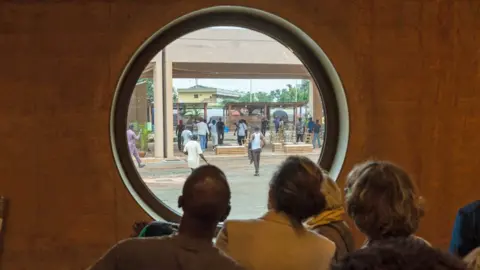
The nation's remarkable new Museum of West African Art (Mowaa) has ended up in the crosshairs of local power politics during the time it was supposed to – but failed – to begin operations to the visitors for the very first time.
The Major Initiative
The six-hectare campus stands in the core of Benin City, capital of the southern state of Edo – and includes an excavation site and buildings planned by celebrated dual heritage architect Sir David Adjaye, best known for the National Museum of African American History and Culture that opened in Washington DC in 2016.
It has been 60 months in the creation – and is envisioned to celebrate both the past and the current era of cultural innovation in the area known for the historic artworks, historical pieces looted from the royal palace by British troops in the nineteenth century.
Setup and Prospects
It is notable – and before the scheduled opening, Mowaa was energetic with staff resolved to show it is a place that can rival renowned cultural centers in the West.
Inside conservators meticulously opened artworks from safety materials, inspecting each item and taking thorough notes before positioning them on exhibition areas and bases.
Experts adjusted temperature regulation systems. In the materials science laboratory, officers calibrated devices intended to preserve ancient items.
Funding and Economic Goals
The project has been the brainchild of entrepreneur Phillip Ihenacho – now Mowaa's executive director.
"I hope us to have a substantial economic impact on area populations in this region," he told media outlets, mentioning that he wanted to make the city "a tourism center."
Mowaa, a charitable Nigerian institution, aims at creating more than 30,000 direct and indirect jobs and providing more than $80m annually to the local cultural industry through partnerships and events.
Financial Support and Government Issues
It has taken $25m to achieve this stage – funds collected from various supporters, featuring the international partners, the UK museum and the local administration.
But now the regional administration has withdrawn support from beneath it – canceling the utilization of the property on which the facility was constructed.
An official representative clarified this was because in the initial documents it had called itself EMOWAA – and it had subsequently dropped "the state identifier" from its designation.
Demonstrations and Government Action
This declaration came after rallies on Sunday, when people invaded the campus insisting it be designated the Benin Royal Museum.
A boisterous group harassed overseas dignitaries at the venue before the launch – requiring them to be hurried away under official guard.
Head of state Bola Tinubu has also become involved to work to address the tensions, setting up a high-level committee to address the controversy.
Governance Issues
But how has this turned into so divisive – and such a public relations crisis?
Much of it comes down to local power struggles at a area administrative level, as it was the former state leader Godwin Obaseki – whose term in office finished recently – who was a primary advocate of the initiative.
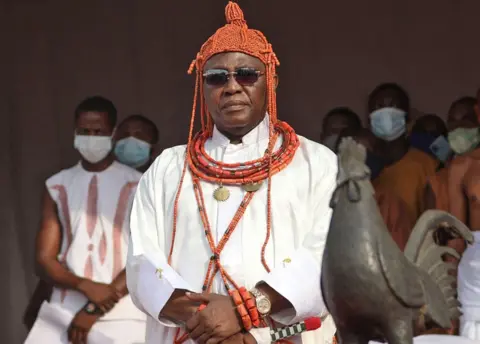
And it appears the leadership of the current leader, a close ally of the regional monarch, called the traditional leader, may want more of a stake in the initiative. The activists on that day, for instance, were calling for that the museum be placed under the control of the current Oba.
The Benin Bronzes Controversy
This brings into focus the contentious issue of the cultural artifacts, one of the continent's most famous artistic heritage.
Because although the museum does finally begin operations, these objects will be noticeably missing.
They are metal, ivory and timber sculptures that once embellished the monarch's home of the historical empire before British soldiers stole them in 1897 during a punitive expedition.
Currently, thousands remain scattered across museums in Western nations -- featuring the British Museum, German museum and the American museum.
Repatriation Campaigns
Their repatriation has become one of the most disputed discussions in the global art world. Roughly 150 have currently come back – and additional are expected to return.
When plans for the facility in the city were first announced in the pre-pandemic era, the key players on the national arts community hoped it would become their natural home – a modern facility to show them off to the global audience.
But the waters were muddied some time back after the federal government stated that the Oba would be the proper guardian of returned objects – and the royal household pushed for a facility under the king's authority, against the preferences of the ex-leader.
Diplomatic Challenges
This left Mowaa in a delicate position: expressing a definite position on repatriation while being careful on guardianship – and highlighting its wider mission, which led to|c


